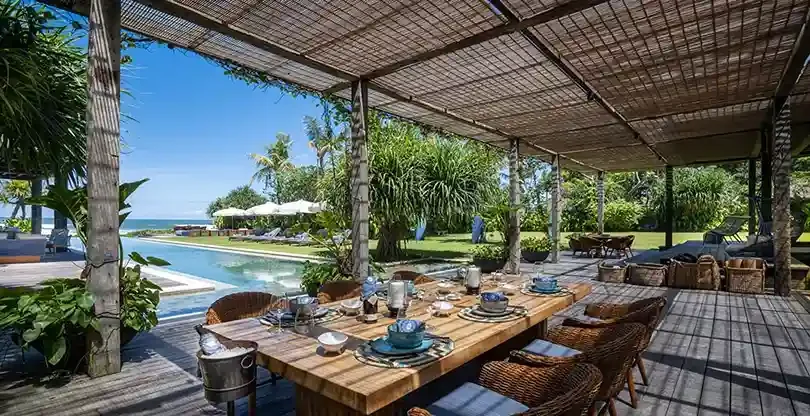
How to Buy a Bali Branded Residence in 2027: Legal Structures, Leasehold Rules, and Due Diligence for Foreign Investors
By Bali Branded Residences Editorial Desk ·
Bali’s branded residences market, a niche within the broader hospitality-managed real estate sector, is experiencing rapid expansion. Accounting for approximately 10-15% of active supply, this segment is projected to double in scale by 2030, driven by strong tourism demand and evolving rental regulations. Foreign investors are increasingly targeting these properties for their premium positioning.
How to Buy a Bali Branded Residence in 2027: Legal Structures, Leasehold Rules, and Due Diligence for Foreign Investors
The Bali branded residences market is undergoing significant expansion, offering compelling opportunities for foreign investors. This guide outlines the legal frameworks, leasehold specifics, and essential due diligence required for acquiring such properties in 2027.
Market Size and Growth Trajectory (2025–2027)
As of March 2025, Bali’s hospitality-managed real estate market comprised 59 projects with 3,643 units. By early 2026, this had expanded to over 70 hospitality-managed developments actively on sale. Within this segment, branded residences represented approximately 15% of total hospitality-managed supply in March 2025, a figure that adjusted to around 10% of active supply by early 2026.
These shares imply that total hospitality-managed units in early 2026 were likely in the range of 4,200–4,500 units. Consequently, branded residences represent a material segment, with approximately 400–650 units actively in the market. This indicates a niche, yet significant, investment opportunity.
The global branded residences sector is valued at over $30 billion annually, encompassing approximately 700 projects worldwide and demonstrating a growth rate of about 12% per annum. Bali is recognised as a key emerging market within the Asia-Pacific region. Branded residence inventory in Bali has increased from 13% to approximately 18% of the total hospitality-managed supply within a single year, according to C9/Horwath data from 2024–2025 to 2025–2026. JLL-referenced data indicates that Bali hotel and hospitality investment reached approximately $830 million in Q1 2026 for Bali Province, with analysts anticipating the branded niche to roughly double by 2030.
Given these data points, the annual growth in Bali branded residence inventory for 2026–2027 is projected to be in the high single-digits to low double-digits, aligning with the global sector growth and recent local market share gains. By 2027, Bali is likely to feature 80–90 hospitality-managed projects, with branded residences accounting for approximately 800–1,000 units. The total value of Bali’s branded residence market is expected to reach $1.2–$1.5 billion by 2027, assuming an average unit price of $1.5 million. This represents a substantial increase from the approximately $600–$975 million valuation in early 2026.
2027 Note on Market Evolution
By 2027, the market is expected to see increased concentration in key coastal hubs, with a notable shift towards integrated resort developments. These developments often feature a mix of residential, hotel, and leisure components, further enhancing investor appeal through diversified revenue streams and amenities.
Legal Structures for Foreign Ownership
Foreign investors cannot hold freehold title to land in Indonesia. However, several legal structures facilitate foreign ownership of property, primarily through long-term leasehold arrangements or corporate vehicles.
Hak Pakai (Right to Use)
Hak Pakai is a direct right to use land, typically for a period of 30 years, extendable for another 20 years, and then renewable for an additional 30 years, totalling 80 years. This right can be granted to individual foreign nationals domiciled in Indonesia or to Indonesian legal entities wholly or partially owned by foreign investors.
Leasehold (Hak Sewa)
Leasehold is the most common and practical structure for foreign investors acquiring branded residences. This involves leasing land from an Indonesian landowner for a specified period, typically between 25 and 30 years, with options for extensions. Extensions can range from 25 to 70 years, depending on the initial agreement and prevailing regulations. The lease agreement should be comprehensive, detailing all terms, extension options, and potential sale or transfer conditions.
PT PMA (Foreign Investment Company)
For larger investments or multiple properties, establishing a PT PMA (Perseroan Terbatas Penanaman Modal Asing) – an Indonesian limited liability company with foreign shareholding – is a viable option. A PT PMA can hold Hak Guna Bangunan (HGB), or Right to Build, for 30 years, extendable for 20 years, and renewable for another 30 years. This structure provides a robust legal framework for operating commercial properties, including branded residences within a hospitality management scheme.
Leasehold Rules and Considerations
Understanding the intricacies of Bali’s leasehold rules is crucial for foreign investors. The duration, extension clauses, and transferability are key factors.
- Initial Lease Term: Typically 25–30 years.
- Extension Options: Critical for long-term investment. Agreements should clearly stipulate the terms for extensions, including pricing mechanisms (e.g., market rate, pre-determined fixed rate, or a formula). Common extensions range from 25 to 70 years.
- Notarisation: All leasehold agreements must be notarised by an Indonesian Public Notary (Notaris) to be legally binding and enforceable.
- Land Certificate: Ensure the underlying land has a clear certificate (Sertifikat Hak Milik – SHM) in the name of the lessor. This verifies the lessor’s legal right to lease the property.
- Sub-Leasing: Branded residences often involve a sub-lease structure where the developer leases the land and then sub-leases the individual units to buyers. The terms of the master lease and sub-lease must be consistent and transparent.
Due Diligence for Bali Branded Residences
Thorough due diligence is non-negotiable to mitigate risks and ensure a secure investment. This involves legal, financial, and operational assessments.
Legal Due Diligence
This phase verifies the legality of the property and the transaction.
- Land Title Verification: Confirm the land certificate (SHM) is clear, unencumbered, and registered in the correct name. Check for any disputes or claims.
- Developer’s Permits: Verify all necessary permits for construction, operation, and marketing are in place (e.g., IMB – building permit, Amdal – environmental impact assessment).
- Lease Agreement Review: A legal review of the lease agreement, including all clauses related to term, extensions, transfer, termination, and dispute resolution.
- Management Agreement Review: For branded residences, the management agreement with the hospitality brand is critical. Understand the revenue share, operational costs, owner usage rights, and exit clauses.
- Tax Implications: Understand local property taxes, rental income taxes, and potential capital gains taxes on transfer.
Financial Due Diligence
Assessing the financial viability and transparency of the investment.
- Developer’s Financial Stability: Research the developer’s track record, previous projects, and financial health.
- Payment Plan Analysis: Understand the bali branded residences payment plan structure. Typical plans involve an initial deposit (10–30%), staged payments during construction, and a final payment upon completion. Ensure the payment schedule aligns with construction milestones and provides safeguards for the buyer.
- Projected Returns: Scrutinise rental projections, occupancy rates, and operational costs provided by the brand or developer. Compare these with independent market research.
- Service Charges and Fees: Clarify all recurring costs, including service charges, sinking fund contributions, and management fees.
A typical Bali branded residences payment plan might look like this:
| Payment Stage | Percentage of Purchase Price | Description |
|---|---|---|
| Booking Fee | IDR 50,000,000 – 100,000,000 | Non-refundable, reserves the unit. Credited against the down payment. |
| Down Payment | 20-30% | Due upon signing the Sale and Purchase Agreement (SPA). |
| Construction Milestones | 40-60% (staged) | Payments tied to construction progress (e.g., foundation, structure, roof, finishing). |
| Handover/Completion | 10-20% | Final payment due upon unit completion and handover. |
Operational Due Diligence
Understanding how the property will be managed and maintained.
- Brand Reputation: Evaluate the hospitality brand’s reputation, operational standards, and marketing reach.
- Management Team: Assess the local management team responsible for day-to-day operations.
- Owner Usage Policy: Clarify personal usage allowances, blackout periods, and any associated costs for owners.
- Maintenance and Upkeep: Understand the maintenance schedule, quality standards, and who bears the cost of major repairs.
Key Investment Considerations for 2027
By 2027, Bali’s branded residences market will have matured further, with increased competition and potentially more stringent regulatory oversight. Investors should focus on properties with strong branding, proven developers, and favourable leasehold terms. The increasing concentration of projects in key coastal hubs such as Canggu, Seminyak, and Uluwatu suggests that location will remain a primary driver of value and rental yield.
Furthermore, the tightening of rental regulations is expected to favour professionally managed, compliant properties. Branded residences, by their nature, are typically fully compliant with tourism and hospitality regulations, offering a distinct advantage over unregulated private rentals. This regulatory environment reinforces the appeal of branded assets for discerning investors seeking stability and long-term appreciation.
Considering the projected doubling of the branded niche by 2030, early entry into well-positioned projects in 2027 offers access to capital appreciation and robust rental income streams, supported by Bali’s sustained tourism growth and the intrinsic value of a globally recognised brand affiliation.
Investing in Bali branded residences in 2027 requires a methodical approach to legal structures, leasehold rules, and comprehensive due diligence. The market’s growth trajectory and increasing institutionalisation present a compelling opportunity for foreign investors seeking exposure to a dynamic luxury real estate segment. For personalised guidance on navigating this market and identifying suitable investment opportunities, book an investment consultation on WhatsApp.
Market estimate from third-party sources — not a guarantee of returns.
Related reading
- Bali Branded Residences Buyer Guide 2027: Evaluating 68 Private Villas, 3–6 Bedroom Options, and Spectacular Cliffside Sites
- Lifestyle Guide: Accessing Clubhouses, Coworking Areas, and Private Gyms in Bali’s Newest 8-Hectare Branded Estates
- Bali Branded Residences Buyer Guide 2027: How to Navigate the Launch of Mandarin Oriental and Other New Entrants