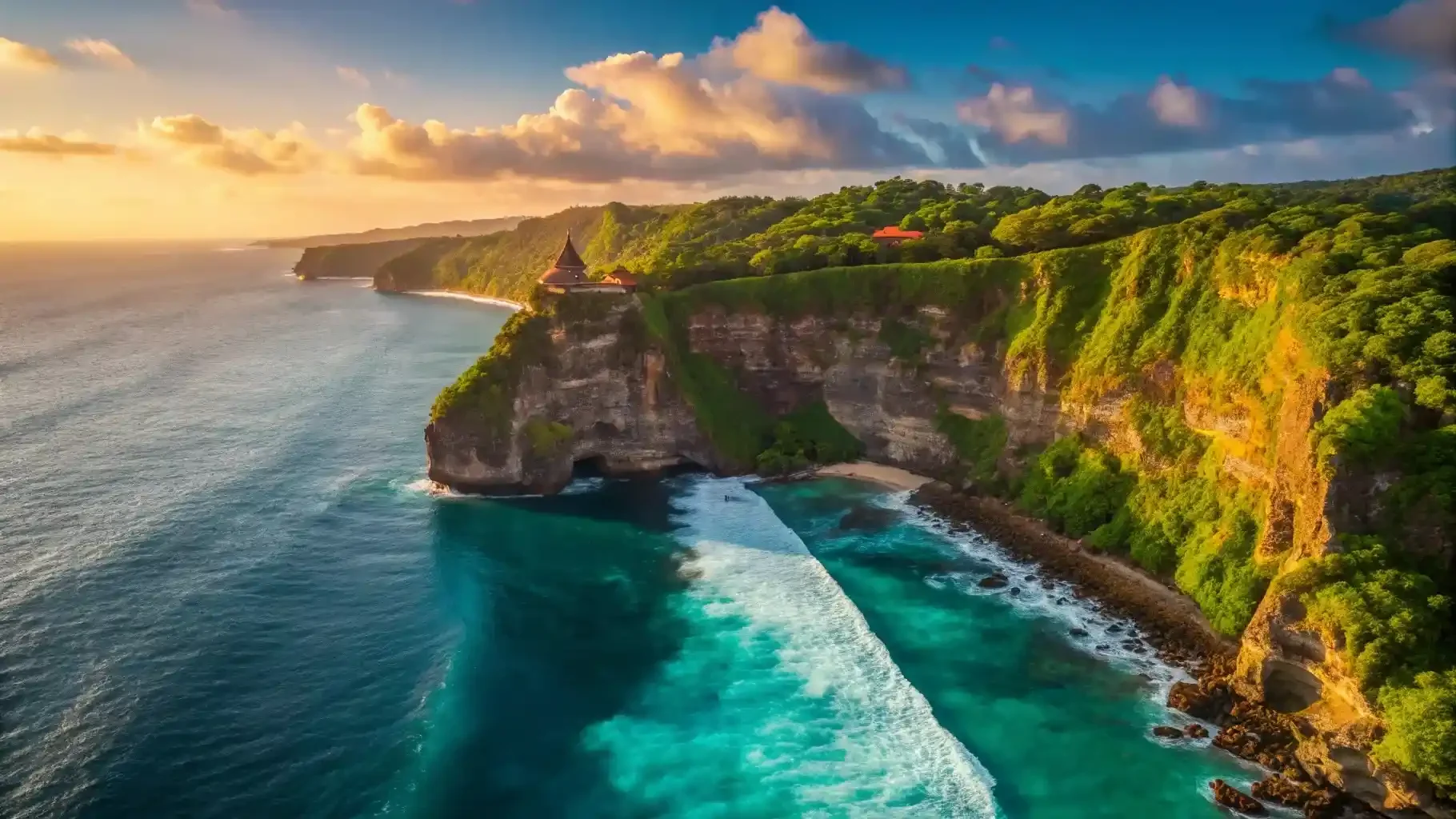
Bali Branded Residences Buyer Guide 2027: Evaluating 68 Private Villas, 3–6 Bedroom Options, and Spectacular Cliffside Sites
By Bali Branded Residences Editorial Desk ·
Bali’s branded residences market is experiencing rapid growth, driven by robust tourism and tightening rental regulations. This segment, though currently a niche, is expanding quickly, with a significant increase in inventory and investor interest. Properties are concentrated in key coastal areas, commanding substantial price premiums.
1. Market Size and Growth (2025–2027)
As of March 2025, Bali’s hospitality-managed real estate market comprised 59 projects with 3,643 units. By early 2026, this had expanded to over 70 hospitality-managed developments actively on sale. Within this broader market, branded residences represented approximately 15% of total hospitality-managed supply in March 2025, and about 10% of active supply by early 2026.
These figures suggest that total hospitality-managed units in early 2026 were likely in the range of 4,200–4,500 units, extrapolating from the 2025 data and the increase in project count. Consequently, branded residences account for approximately 400–650 units actively in the market, establishing a niche yet material segment.
Growth Drivers
The global branded residences sector is a significant market, valued at over $30 billion annually, with approximately 700 projects worldwide and an annual growth rate of about 12%. Bali is recognised as an emerging hotspot within the Asia-Pacific region. The island has seen its branded residence inventory increase from 13% to approximately 18% of total hospitality-managed supply within a single year, according to C9/Horwath data from 2024–2025 to 2025–2026. JLL-referenced data indicates that Bali hotel and hospitality investment reached approximately $830 million in Q1 2026 for Bali Province, with analysts anticipating the branded niche to roughly double by 2030.
Given these data points, a reasonable working view for 2026–2027 is an annual growth in Bali branded residence inventory in the high single-digits to low double-digits, aligning with the global sector growth and recent local share gains. By 2027, Bali is likely to have 80–90 hospitality-managed projects, with 15–20 of these being branded residences.
2027 Note: By 2027, the market is projected to feature 15-20 distinct branded residence projects, offering a more diverse range of investment opportunities compared to previous years.
2. Investment Performance and Premiums
Branded residences typically command a significant price premium over comparable non-branded luxury properties. Globally, this premium averages 30–35%, and can range from 10% to over 100% depending on the brand, location, and services offered. In Bali, branded residences are observed to achieve premiums in the 25–40% range, reflecting the strong brand recognition and enhanced service offerings.
Rental Yields and Occupancy
While specific Bali-branded residence rental yields are proprietary, the general performance of luxury hospitality in Bali provides a strong indicator. Average daily rates (ADR) for luxury hotels in Bali were approximately $250–$350 in 2025. Occupancy rates for luxury segments frequently exceed 70% during peak seasons and maintain strong year-round averages. Branded residences, with their professional management and global distribution networks, often outperform independent luxury villas in terms of occupancy and ADR, contributing to more stable and potentially higher net operating income.
3. Buyer Profile and Demand
The primary buyers of Bali branded residences are high-net-worth (HNW) individuals, family offices, and institutional funds. These investors are typically seeking a combination of capital appreciation, rental income, and lifestyle benefits. International buyers, particularly from Australia, Singapore, Hong Kong, and Europe, constitute a significant portion of the market. Domestic Indonesian investors are also increasingly active, drawn by the prestige and investment stability of branded products.
Key Motivations
- Investment Returns: Strong capital appreciation prospects and attractive rental yields.
- Lifestyle: Access to luxury amenities, services, and prime locations for personal use.
- Brand Assurance: Confidence in quality, maintenance, and service standards provided by reputable international brands.
- Ease of Ownership: Professional management handles all aspects of property maintenance and rental, reducing owner burden.
4. Key Locations and Property Types
Branded residences in Bali are concentrated in key coastal hubs renowned for their tourism infrastructure and luxury appeal. These include:
- Uluwatu: Known for its spectacular cliffside sites, ocean views, and high-end resorts. Properties here often feature 3–6 bedroom options and offer direct access to beaches and surf breaks.
- Seminyak/Canggu: Established luxury tourist areas with vibrant dining and retail scenes. Branded properties here typically offer a mix of private villas and apartment-style units.
- Nusa Dua: An integrated resort area with a focus on five-star hospitality and convention facilities. Branded residences here benefit from extensive resort amenities.
Property types available include private villas, often with 3–6 bedrooms, ranging from 300 sqm to over 1,000 sqm of built area. These frequently include private pools, landscaped gardens, and ocean or cliff views. There are also smaller footprint options such as luxury apartments and residences within larger integrated resort complexes.
5. Evaluating 68 Private Villas, 3–6 Bedroom Options, and Spectacular Cliffside Sites
Our advisory monitors a portfolio of private villa opportunities suitable for branded residence development or acquisition. While specific project details are proprietary, a general overview of the offerings can be provided.
The market currently presents approximately 68 private villas that meet the criteria for potential branded residence integration or stand-alone investment, primarily across Uluwatu, Seminyak, and Nusa Dua. These properties generally fall into the 3- to 6-bedroom category, appealing to both individual HNW buyers and larger family office requirements.
Uluwatu Cliffside Sites
Uluwatu remains a prime location for branded residences due to its dramatic topography and ocean vistas. Opportunities here frequently involve spectacular cliffside sites, offering unobstructed ocean views and direct beach access in some instances. These sites are particularly attractive for developers seeking to create iconic, high-value branded properties. Considerations for cliffside developments include:
- Geotechnical Stability: Rigorous assessment of land stability is paramount.
- Accessibility: Ensuring practical access for construction and future residents.
- View Corridors: Maximising ocean views while adhering to local planning regulations.
The majority of these properties are new builds or recently renovated to international luxury standards. They typically feature expansive living areas, private infinity pools, and high-specification finishes. The availability of larger 5- and 6-bedroom villas caters to multi-generational families or investors seeking higher rental yields from larger groups.
Table: Indicative Branded Residence Property Characteristics (2026–2027)
| Characteristic | 3-Bedroom Villa | 4-Bedroom Villa | 5-6 Bedroom Villa |
|---|---|---|---|
| Built Area (Approx.) | 300–450 sqm | 450–600 sqm | 600–1000+ sqm |
| Land Area (Approx.) | 500–800 sqm | 800–1200 sqm | 1200–2000+ sqm |
| Key Locations | Seminyak, Canggu, Uluwatu | Uluwatu, Nusa Dua | Uluwatu (Cliffside), Nusa Dua |
| Amenities | Private pool, garden, staff quarters | All 3-bed amenities + home cinema/gym | All 4-bed amenities + multiple living areas, larger staff quarters |
| Target Buyer | HNW individuals, smaller families | HNW families, investment groups | Family offices, institutional investors |
6. Regulatory Environment and Future Outlook
Indonesia’s government continues to implement policies supportive of foreign investment in the property sector, particularly in tourism-focused areas like Bali. Recent regulatory changes, including adjustments to visa policies and property ownership structures for foreigners, aim to enhance investor confidence and streamline processes. The tightening of rental regulations also favours professionally managed branded residences, providing a more structured and compliant operational framework compared to independent short-term rentals.
The future outlook for Bali branded residences remains positive. The market is expected to continue its growth trajectory, driven by sustained tourism demand, increasing HNW migration to the region, and the appeal of established brands. The supply of prime, developable land, particularly cliffside sites, is finite, which is expected to support property values and capital appreciation in these exclusive locations.
For a detailed evaluation of specific opportunities within Bali’s branded residences market and to discuss how these align with your investment objectives, book an investment consultation on WhatsApp with our advisory team.
Market estimate from third-party sources — not a guarantee of returns.
Related reading
- Buyer’s Guide to Bali’s New Launch Zones: Shifting from Canggu/Berawa to Seseh, Pererenan, and Nyanyi Due to Land Constraints
- Top 5 Buyer Mistakes When Investing in Bali Branded Residences in 2027: From Legal Structure Blunders to Ignoring the Shift to Seseh and Pererenan
- Cost Breakdown for Bali Branded Villas: From IDR30M to IDR65M per Square Metre and the 25–35% Brand Premium